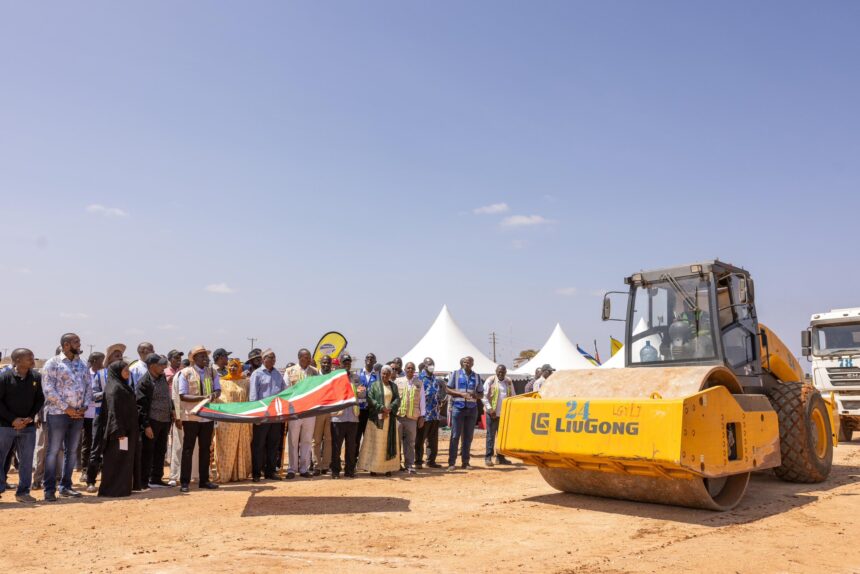
The ongoing construction of the Horn of Africa Gateway road boosts trade, create jobs, and connect Northern parts of the country to local, regional and international markets.
The 205-kilometre Isiolo-Kulamawe-Modogashe road will be upgraded to bitumen standards to enhance safety and accessibility for residents of the most marginalised minority group in Kenya.
The new modern road passes through Meru, Isiolo, Garissa, Wajir, and Mandera counties, linking remote towns to key trade corridors. The upgrade is aimed at reducing travel times, lower transport costs, and support rural and pastoral communities, traders, and small businesses.
The road linking the region to Somalia and Ethiopia seeks to make Nairobi a regional trading and driving economic growth.
The government is also building the Isiolo-Mandera road in partnership with the African Development Bank, World Bank and the Arab Bank to further open up the region.
President William Ruto commissioned the Horn of Africa Gateway project in Garbatula, Isiolo County, in February 2025. The launch included the Isiolo-Kulamawe and Kulamawe-Modogashe roads, as well as the Garbatula Town loop road, which will improve local access and mobility.

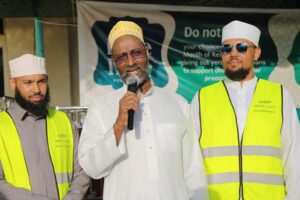
The project is part of a broader government plan to transform Northern Kenya. Mr. Osman Ahmed, a resident of Garissa, said the undertaking has created jobs, improved access to healthcare and education, and fostered inter-county and regional integration.
“Communities that were previously isolated now have opportunities for growth and development,” said the retired teacher. “It is more than a road. It is a lifeline for our communities.”
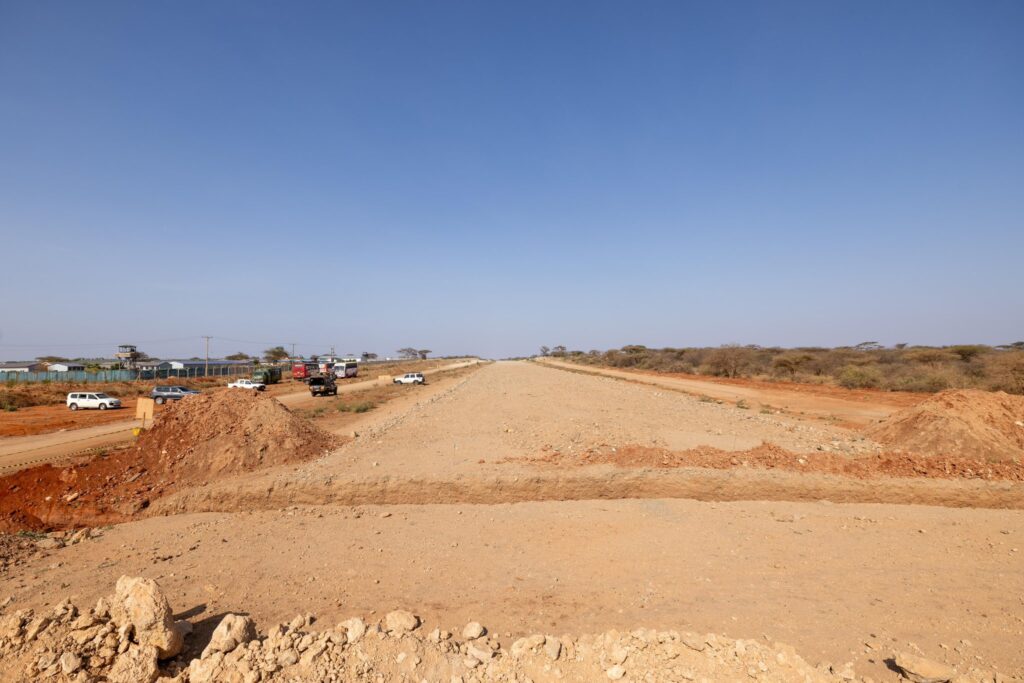
The road upgrade is expected to improve transport and trade across Meru, Isiolo, Garissa, Wajir, and Mandera counties. Photo/ KENHA
This road, part of the East Africa Regional Transport, Trade, and Development Facilitation Project, is a partnership between the Government of Kenya and the World Bank. It is implemented by the Kenya National Highways Authority (KeNHA), which is responsible for the development, rehabilitation, management, and maintenance of all national trunk roads composed of Class S, A, and B roads.
Road Classifications in Kenya:
- Class-S Road: A highway connecting two or more cities, designed to carry a large volume of traffic safely at the highest speed of operation. Total: 40 km (all paved).
- Class-A Road: A highway forming a strategic route connecting international boundaries, immigration entry and exit points, and international terminals such as air or seaports. Total: 6,830 km (4,975 km paved, 1,855 km unpaved).
- Class-B Road: A highway linking national trading or economic hubs, county headquarters, and other nationally important centers to each other and to the national capital or to Class-A roads. Total: 14,713 km (7,202 km paved, 7,511 km unpaved).
The venture seeks to stimulate economic activity across Northern Kenya and improve livelihoods. Traders and pastoral communities along the route “will be able to move produce faster and access regional markets safely.”
The plan is to connect people, markets, and opportunities to enhance inclusive development and boost Northern Kenya’s role in regional trade.
Northern Kenya was historically sidelined during British colonial rule and continued to face marginalisation under successive post-independence regimes.
President William Ruto has pledged to ensure fair equitable sharing of national resources and end years of State-sanctioned discrimination of Northern Kenya residents.
“There are no reasons to continue subjecting others to unnecessary ethnic profiling,” he said.
President William Ruto publicaly signed a Presidential Proclamation abolishing the long-standing extra vetting of ID applicants in border counties at Orahey Grounds in Wajir Town in February 2025.
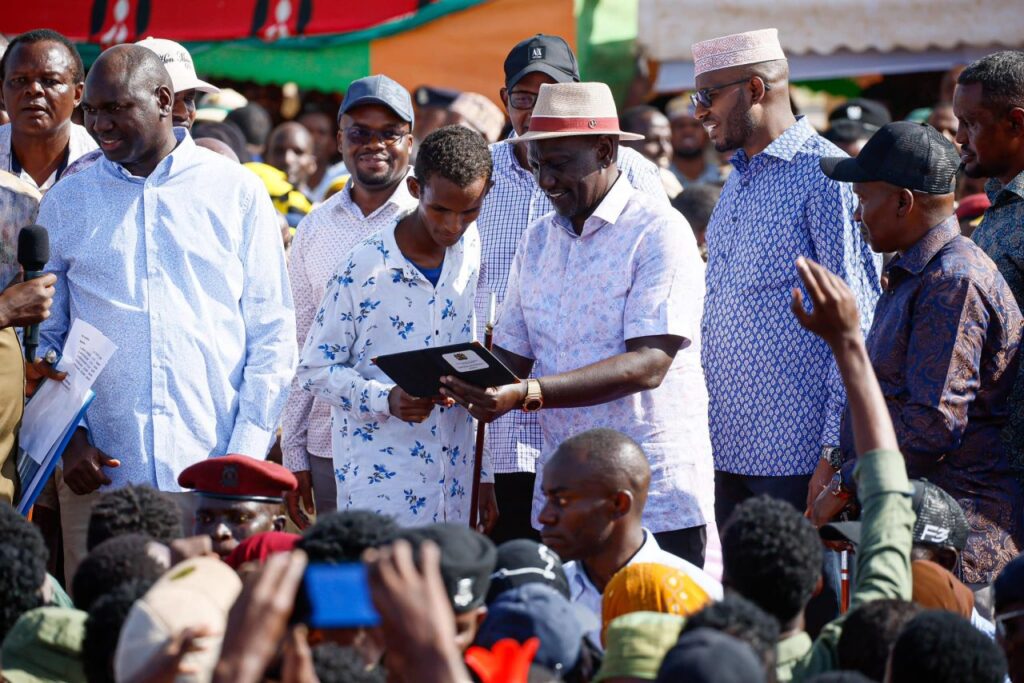
President William Ruto signs a decree ending years of State discrimination in the issuance of the vital documents. Photo/ Courtesy
“If it’s about vetting, let all children of Kenya be vetted equally without discrimination and other state induced iniquities ” he said.
The predominantly Somali-inhabited North Eastern region has for years been subjected to additional screening before residents can obtain birth certificates and national identity cards.
President Ruto said the new directive will end the disparity and ensure equal treatment for all Kenyans.