Security forces in Somalia’s semi-autonomous state of Jubaland have killed more than 60 al-Shabab militants, including senior operatives, during a four-day military offensive in the Lower Juba region, officials said Sunday.
The operation was carried out in the Lagta Hola–Wajeer area of Badhaadhe district, targeting insurgent hideouts in what authorities describe as the “Black Sea” forested zone — a long-standing militant stronghold used to stage attacks across the region.
According to the Jubaland Intelligence and Security Agency, the offensive was led by regional security director Mohamed Ahmed Sabriye, also known as “Basaam,” and was supported by air operations from international partners.
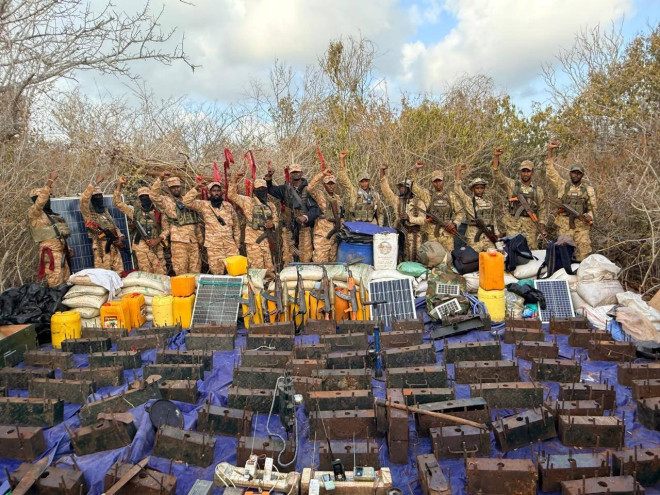
Security officials said forces recovered the bodies of at least 60 fighters and seized a significant cache of weapons and equipment, including landmines, improvised explosive devices (IEDs), communications gear, and other military supplies.
Several militant facilities were also destroyed, including logistics hubs, weapons depots, bomb-making sites, and command centers.
Authorities noted that the targeted locations had been used to coordinate attacks against civilians and security installations, including a recent assault in the Kudhaa area.
Jubaland President Ahmed Mohamed Islam Madobe, who is currently in Mogadishu for political consultations, commended the regional forces for what he termed a decisive blow against the group.
He pledged that security operations would continue until militant elements are fully eliminated from Lower Juba.
Al-Shabab, an al-Qaida-affiliated militant group, has waged a prolonged insurgency against the Somali federal government for over 15 years and continues to maintain pockets of influence in parts of southern Somalia, particularly in rural areas.
The latest offensive marks one of the most significant operations in Lower Juba in recent months, amid ongoing efforts by regional and federal authorities to degrade the group’s operational capacity.