
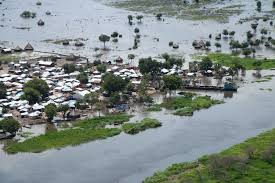
Seasonal flooding has once again displaced thousands of people across several regions of South Sudan, destroying homes, crops, and livestock and worsening an already fragile humanitarian situation. Low-lying areas and riverine communities have been particularly affected as rising waters inundate villages and farmland.
Aid agencies report urgent needs for food, shelter, clean water, and medical care, warning that access challenges and limited resources are hampering response efforts. Many displaced families are sheltering in overcrowded camps or seeking refuge on higher ground with limited services.
The flooding has had a severe impact on food security. Crops ready for harvest have been washed away, while livestock losses have reduced household incomes and nutrition. Markets in affected areas have been disrupted, driving up food prices and increasing reliance on aid.
Climate experts note that flooding cycles in South Sudan have become more frequent and intense due to climate variability. Combined with poor drainage infrastructure and limited flood control measures, communities remain highly vulnerable to seasonal shocks.
Authorities say long-term investment in flood mitigation, early warning systems, and climate-resilient infrastructure is essential to protect livelihoods. Humanitarian agencies have echoed calls for durable solutions, warning that repeated flooding without preventative measures will continue to displace communities and deepen food insecurity.

